
Every organization runs on workflows: approvals, data entry, document handling, payments, and communication. When these workflows rely on manual effort and disconnected tools, operations slow down and errors increase.
Workflow automation solves this by allowing processes to run automatically, accurately, and at scale.
Workflow automation is the practice of using software to execute business processes automatically from start to finish.
Instead of people moving information between systems, automation allows workflows to:
With AI-powered platforms like IOFLOW, workflows can also understand documents, enrich data, and make intelligent decisions and not just follow fixed rules.
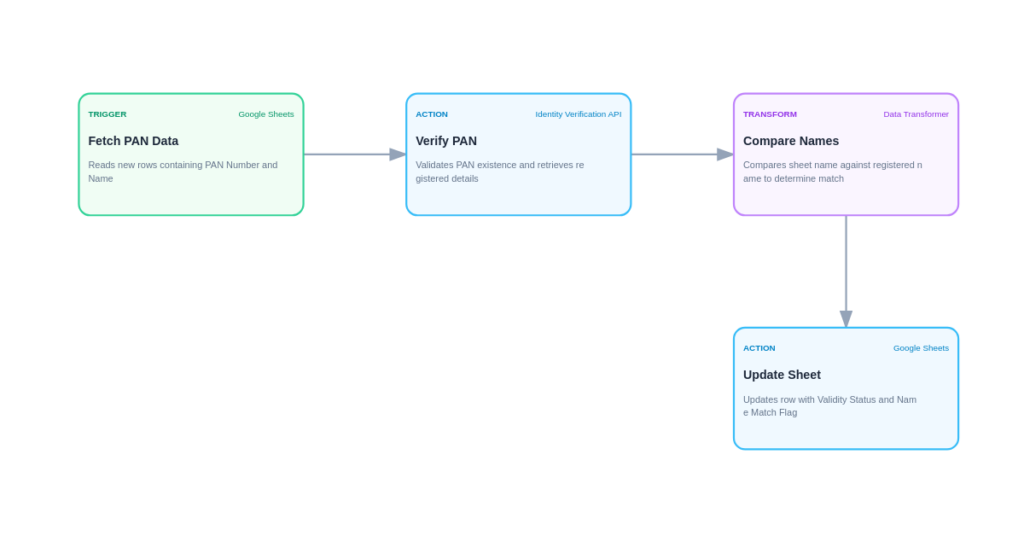
A workflow typically follows four simple stages:
1. Trigger: A workflow begins when something happens such as receiving an email, uploading a document, or reaching a scheduled time.
2. Data Processing: The system collects and processes data from connected applications or documents. AI enables the workflow to understand unstructured inputs like PDFs or spreadsheets.
3. Decision Logic: Business rules determine what happens next. The workflow can adapt based on conditions, approvals, or data values.
4. Execution: Actions are carried out automatically like updating systems, sending messages, triggering payments, or syncing records without manual intervention.
Each step is tracked and controlled within a single flow.
IOFLOW is built to automate real-world business workflows end to end.
It goes beyond basic automation by combining:
Workflow automation allows businesses to move from manual execution to intelligent operations. By automating processes instead of isolated tasks, organizations gain speed, accuracy, and scalability.
Workflow automation is how modern businesses operate. IOFLOW is built to power it.